
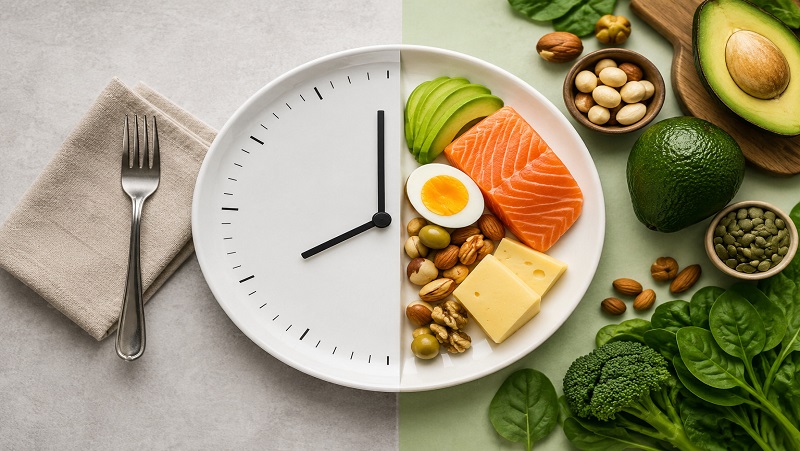
Key Takeaways
- Combining keto and intermittent fasting may accelerate fat burning and ketosis.
- Both approaches support weight loss, but results vary by individual.
- Prioritize protein, nutrient quality, and long-term dietary sustainability.
- Benefits may include appetite control, but challenges can affect adherence.
- Medical supervision is important for diabetes, metabolic conditions, or medications.
Intermittent Fasting and Keto: A Popular Weight Loss Combination
Intermittent fasting and the keto diet are two of the most talked-about weight loss methods today. It’s no surprise that many people wonder whether combining them can deliver even better results or help them lose weight faster.
An intermittent fasting diet plan for weight loss focuses on when you eat, while a keto diet plan focuses on what you eat. Individually, both approaches may support fat loss and improve certain metabolic health markers. Together, they may accelerate the body’s transition into fat burning and ketosis, but that doesn’t necessarily make them the right choice for everyone.
One of the most common questions patients often ask me is: “Should I combine an intermittent fasting plan with a keto diet for weight loss?”
The short answer is: it depends.
Also, when combined, they may appear to offer a powerful shortcut to weight loss.
But is going faster better? Not always.
The more important question isn’t whether this combination works. It’s whether it’s sustainable, nutritionally balanced, and appropriate for your lifestyle, medical history, and long-term health goals. To understand this better, let’s take a look at both plans and how their combination can work.
What Is an Intermittent Fasting Plan?
Intermittent fasting (IF) is an eating pattern that cycles between periods of eating and fasting. Common approaches include:
- 12:12 fasting
- 14:10 fasting
- 16:8 fasting
- 5:2 fasting
Research suggests that time-restricted eating may support modest weight loss, reductions in body fat, and improvements in insulin sensitivity, particularly when paired with healthy dietary habits.
What Is a Keto Diet Plan?
A keto diet plan, also known as a ketogenic diet plan, is a very low-carbohydrate, moderate-protein, high-fat eating pattern.
Typically, carbohydrates are restricted to approximately 20-50 grams per day. This reduction encourages the body to produce ketones, which become an alternative fuel source when glucose availability is low.
A ketogenic diet for weight loss often includes:
- Eggs
- Fish
- Poultry
- Meat
- Nuts and seeds
- Avocados
- Olive oil
- Non-starchy vegetables
Foods commonly limited include:
- Bread
- Pasta
- Rice
- Sugary beverages
- Most desserts
- Many processed foods
Research indicates ketogenic diets can promote weight loss and improve glycemic control in some individuals, although long-term adherence can be challenging.
Why People Combine Keto and Intermittent Fasting
The combination has become popular because both strategies encourage the body to rely more heavily on stored fat for energy. During fasting periods, insulin levels decline, allowing greater access to fat stores. Similarly, carbohydrate restriction in a ketogenic diet reduces glucose availability and promotes ketone production.
Together, these mechanisms may:
- Increase fat oxidation
- Reduce appetite in some individuals
- Accelerate entry into ketosis
- Improve metabolic flexibility
Studies have found that both ketogenic diets and intermittent fasting share several metabolic pathways associated with weight loss and improvements in insulin sensitivity.
Potential Benefits of Combining Intermittent Fasting and Keto
Enhanced Appetite Control
Many patients report feeling less hungry when following a ketogenic diet plan for weight loss because protein, fat, and ketones may increase satiety.
Adding an intermittent fasting plan may further reduce snacking and mindless eating.
Faster Initial Weight Loss
People often experience rapid early weight loss due to glycogen depletion and associated water loss. While motivating, it’s important to understand that this initial drop is not purely body fat.
Improved Insulin Sensitivity
Both ketogenic diets and intermittent fasting have been associated with improved insulin regulation, metabolic health, and diabetes management in certain populations.
Greater Dietary Structure
Many people find that combining a ketogenic diet plan with a defined eating window reduces decision fatigue and helps them stay consistent.
Intermittent Fasting Alone vs. Keto Alone vs. Combined Approach
| Factor | Intermittent Fasting Alone | Keto Alone | Combined Approach |
| Weight Loss Potential | Moderate, especially when it reduces overall calorie intake | Moderate to high, particularly during the initial months | May produce faster short-term results for some individuals |
| Appetite Control | Can reduce snacking and improve hunger awareness | Often reduces hunger due to increased protein, fat, and ketone production | May provide stronger appetite suppression than either strategy alone |
| Ease of Following | Generally easier for beginners | Requires significant dietary changes and meal planning | Often, the most restrictive and difficult to sustain long-term |
| Energy During Adaptation | Mild hunger or fatigue initially | “Keto flu” symptoms may occur during adaptation | Greater risk of fatigue, headaches, and low energy early on |
| Metabolic Benefits | May improve insulin sensitivity and metabolic flexibility | May improve blood sugar control and promote ketosis | Potentially enhances some metabolic effects of both approaches |
| Risk of Nutrient Deficiencies | Low when meals are balanced | Moderate if food choices are limited | Higher without careful meal planning |
| Long-Term Sustainability | Often easier to maintain | Varies by individual | Frequently, the most challenging approach to maintain |
| Best For | Individuals seeking a flexible eating structure | Individuals who prefer low-carb eating patterns | Motivated individuals who tolerate both strategies well and can maintain nutritional balance |
| Medical Supervision Recommended? | Helpful for individuals with health conditions | Recommended for those with metabolic or medical concerns | Strongly recommended, especially for individuals with diabetes or those taking weight-loss medications |
Potential Drawbacks You Should Know
Nutrient Deficiencies
Restricting both eating times and food choices may increase the risk of inadequate intake of:
- Fiber
- Magnesium
- Potassium
- Certain B vitamins
Without proper planning, nutritional gaps can develop over time.
Low Energy During Adaptation
Many individuals experience temporary symptoms such as:
- Fatigue
- Headaches
- Brain fog
- Irritability
- Reduced exercise performance
These symptoms are often referred to as the “keto flu.”
Difficulty Maintaining Long-Term
Research consistently shows that sustainability is one of the strongest predictors of successful weight management. An eating strategy that feels overly restrictive often becomes difficult to maintain, regardless of its short-term effectiveness.
Not Appropriate for Everyone
Combining intermittent fasting and keto may not be suitable for:
- Pregnant or breastfeeding women
- People with a history of eating disorders
- People taking diabetes medications
- People with certain medical conditions
Professional guidance is recommended before making major dietary changes.
Which Is Better: Intermittent Fasting or Keto?
There is no universally superior approach.
For some individuals, an intermittent fasting diet plan for weight loss may feel easier because it focuses on meal timing rather than eliminating food groups. Others may prefer a keto diet for weight loss because appetite reduction makes calorie control easier. The best plan is typically the one you can follow consistently while meeting your nutritional needs.
| Pro Tip: Start With One Strategy Before Combining Both
Many people try to adopt a ketogenic diet plan and an intermittent fasting plan simultaneously. In my clinical experience, this often makes adherence harder than necessary. Instead, consider mastering one approach first. For example, establish a sustainable 14:10 or 16:8 intermittent fasting routine before deciding whether additional carbohydrate restriction is necessary. This allows you to evaluate what is actually driving results and what feels realistic long-term. Interested in physician-guided fasting strategies? Explore Kinetix’s Intermittent Fasting Program. |
Personalized Approach Produces Better Long-Term Results
The combination of intermittent fasting and keto may help some individuals achieve meaningful weight loss and metabolic improvements. However, success depends far more on consistency, nutritional quality, and sustainability than on combining multiple restrictive strategies.
Before adopting a ketogenic diet plan for weight loss alongside intermittent fasting, consider whether the approach aligns with your lifestyle, health conditions, and long-term goals. For many people, a personalized plan delivers better and more sustainable results than following trends.
FAQs
1. Can I follow an intermittent fasting diet plan for weight loss while doing keto?
Yes. Many individuals combine an intermittent fasting diet plan for weight loss with a ketogenic diet. Since both approaches encourage the body to rely more heavily on fat for fuel, some people find the combination helps reduce hunger and improve adherence. However, combining them can also increase dietary restriction, making professional guidance valuable for long-term success.
2. Does combining keto and intermittent fasting lead to faster weight loss?
Some people experience faster initial weight loss when combining the two strategies, particularly due to glycogen depletion and water loss. However, long-term fat loss still depends on factors such as calorie intake, protein consumption, physical activity, sleep quality, and consistency. Sustainable habits remain more important than rapid short-term results.
3. What is the best intermittent fasting plan to use with keto?
The most common approach is a 16:8 schedule, where individuals fast for 16 hours and eat within an 8-hour window. Beginners may find a 12:12 or 14:10 schedule easier to maintain. The ideal fasting schedule depends on lifestyle, medical history, activity levels, and personal preferences rather than a one-size-fits-all formula.
4. Is a ketogenic diet plan safe for long-term weight loss?
Research suggests ketogenic diets can support weight loss and metabolic improvements in certain individuals. However, long-term safety and sustainability depend on food quality, nutrient intake, and medical factors. Some people thrive on a ketogenic diet, while others struggle with adherence or nutrient deficiencies. Regular monitoring can help ensure nutritional adequacy.
5. Should everyone combine intermittent fasting and keto?
No. While some individuals benefit from combining these approaches, others may find the restrictions unnecessary or difficult to maintain. People with diabetes, certain medical conditions, a history of disordered eating, or those taking medications should consult a qualified healthcare professional before making significant dietary changes. Personalization remains the most effective approach to long-term weight management